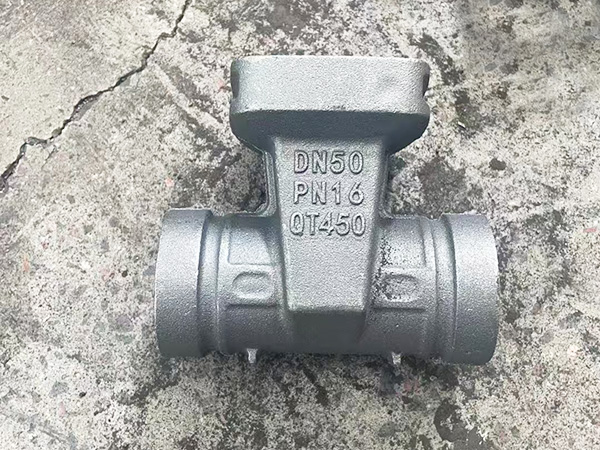
Ductile Iron Parts Machining
Ductile iron parts machining refers to the precision processing of nodular iron(SG iron)castings to meet specific dimensional accuracy,surface quality and functional requirements.As a high-performance metal material,ductile iron combines go...
Ductile iron parts machining refers to the precision processing of nodular iron(SG iron)castings to meet specific dimensional accuracy,surface quality and functional requirements.As a high-performance metal material,ductile iron combines good ductility,toughness and machinability,making it widely used in various industrial fields that require reliable mechanical performance.
The machining of ductile iron parts requires targeted process design due to the material’s unique properties.Common machining processes include turning,milling,drilling,grinding and tapping.Turning is mainly used for cylindrical parts such as shafts and sleeves,ensuring high roundness and dimensional precision;milling is suitable for processing plane,groove and complex contour surfaces;grinding is applied to improve surface finish and dimensional accuracy to meet strict assembly requirements.
Key considerations in machining include tool selection,cutting parameters and cooling lubrication.Carbide tools are preferred for their wear resistance,adapting to the hardness of ductile iron(HB 180-250).Reasonable cutting speed,feed rate and depth of cut can reduce tool wear and improve machining efficiency.Effective cooling and lubrication prevent workpiece overheating,avoid material brittleness and ensure surface quality.
Quality control is crucial during machining,involving dimensional inspection,surface roughness testing and defect detection.Advanced equipment such as CNC machine tools and coordinate measuring machines(CMM)are widely used to achieve high-precision machining.Ductile iron parts after machining are widely used in automotive,machinery,energy,infrastructure and other fields,serving as core components that guarantee equipment stability and service life.