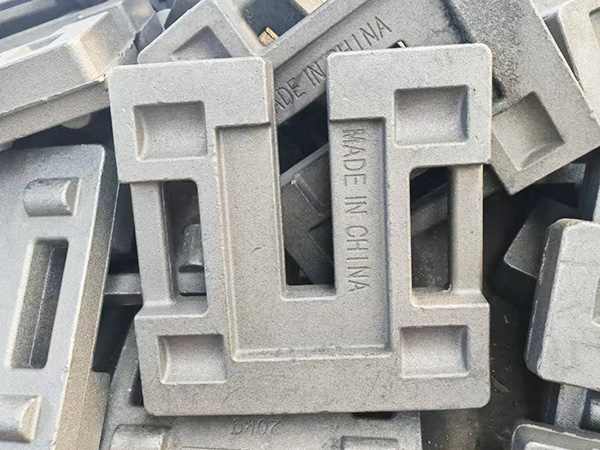
Precision Steel Casting
Precision Steel Casting is a specialized manufacturing process focused on producing high-accuracy,near-net-shape steel components with superior dimensional tolerance,fine surface finish,and complex geometries—far exceeding conventional sa...
Precision Steel Casting is a specialized manufacturing process focused on producing high-accuracy,near-net-shape steel components with superior dimensional tolerance,fine surface finish,and complex geometries—far exceeding conventional sand casting.The dominant method is investment casting(lost-wax casting),supplemented by ceramic mold casting,shell molding,and vacuum casting for critical applications.
Core Process Flow(Lost-Wax Investment Casting,Most Common)
Pattern Making:Create wax patterns(or 3D-printed polymer patterns)matching the final part,assembled into clusters.
Shell Building:Repeatedly dip patterns into refractory slurry(e.g.,silica,alumina)and coat with stucco sand;dry to form a rigid ceramic shell.
De-Waxing&Shell Roasting:Melt/steam out the wax,then fire the shell at high temperature(1000–1250°C)to remove residues and gain strength.
Melting&Pouring:Vacuum induction melting(VIM)or electric arc melting of steel alloys(carbon steel,alloy steel,stainless steel,heat-resistant steel);pour molten steel into the hot shell under gravity or pressure.
Cooling,Shell Removal&Cleaning:Controlled solidification,then knock out the ceramic shell,blast clean,and cut off gating systems.
Heat Treatment&Quality Inspection:Normalizing,quenching/tempering,solution annealing to optimize mechanical properties;NDT methods include X-ray,ultrasonic testing,penetrant testing,industrial CT;dimensional checks via CMM.
Key Technical Advantages&Specifications
Dimensional Tolerance:Typically CT4–CT6(ISO 8062),dimensional deviation down to±0.1 mm for small features;surface roughness Ra 1.6–3.2μm,reducing post-machining significantly.
Design Freedom:Integrate complex internal cavities,thin walls,intersecting holes,and intricate contours in one piece—avoiding multi-part welding and assembly errors.
Material Versatility:Compatible with carbon steel,low-alloy steel,304/316 stainless steel,duplex stainless steel,heat-resistant alloys(e.g.,310S),and wear-resistant steels.
Mechanical Performance:Fine-grained structure via controlled solidification,reduced segregation;vacuum pouring minimizes porosity and gas inclusions.