Introduction
A T-slot cast iron platform is a flat reference surface with machined slots cut into its top face, used to hold workpieces and fixtures during inspection, measurement and assembly. Unlike a plain surface plate, the slots accept bolts and clamps, so a part can be locked down exactly where the operator needs it. That combination of a reliable datum and flexible clamping is why these plates turn up in machine shops, automotive plants, mold workshops and fabrication bays. Botou Mingtu Machinery Equipment Manufacturing Co.,Ltd produces these platforms as part of a wider range of industrial measuring tools and castings. This guide covers the material, accuracy grades, slot layout and daily care of the plate.
What Is a T-Slot Cast Iron Platform
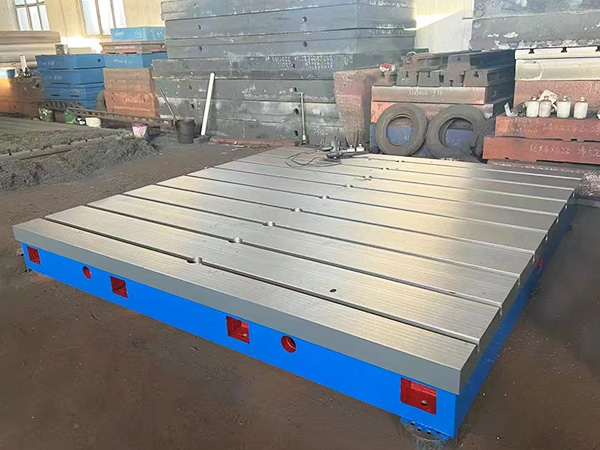
At its core, the product is a precision gray iron plate whose upper working surface has been ground or scraped flat, then milled with a series of parallel T-shaped channels. The narrow mouth of each slot grips a bolt head or a T-nut; the wider cavity underneath lets the nut slide to any position along the slot. A workpiece placed on the plate can therefore be clamped at almost any point without drilling the table or building a custom fixture from scratch. The same plate serves as a reference plane for checking flatness, parallelism and height.
The T-slot cast iron platform is a specialized high-precision planar reference tool integrated with T-slots, mainly used for workpiece inspection, measurement, assembly and fixture positioning in machinery manufacturing, automotive parts, mold and plastics work. Because the datum and the clamping system share one body, setup time drops and repeatability improves.
Material and Heat Treatment
The working body is cast from high-quality gray cast iron, typically HT200 or HT250, with a hardness in the range of HB170–240. Gray iron is chosen for a practical reason: the graphite flakes in its structure absorb vibration and give the material excellent damping, so inspection is less likely to be disturbed by chatter. The same structure makes the iron easy to machine while still offering the wear resistance a production table needs.
Casting alone is not enough. After pouring, the plate carries internal stresses that would slowly distort a precision surface. The standard remedy is an aging treatment: either natural aging for two to three years, or artificial thermal aging, to release those stresses before final machining. Once the casting has settled, the working surface is finished by precision grinding or manual scraping. Skipping or rushing this stage is the single most common reason a plate that looked flat on delivery drifts out of tolerance a few months later.
Accuracy Grades Explained
Flatness on these plates is specified in grades, commonly from 00 (ultra-precision) down to 3 (general purpose), following the same grade logic used for cast iron surface plates. A grade 00 plate is reserved for laboratory-grade metrology and the checking of very fine reference parts. Grades 1 and 2 suit general inspection, toolroom work and the setting-up of machine components. Grade 3 covers rougher shop-floor assembly and fixture mounting where a high-order datum is not required.
Buyers should match the grade to the job rather than simply ordering the highest number available. A tight grade costs more to manufacture and is easier to damage through careless handling. For a fixture plate that spends its life clamping welded assemblies, a mid grade is usually the sensible choice; for a plate used to certify other surface plates, a finer grade is justified. Always ask the supplier how the grade is verified and under what temperature conditions, since cast iron and steel both move with heat.
Slot Design and Layout
Slots are normally parallel and evenly spaced, but their pitch, width and depth should follow the shop's existing clamps and bolts. A layout that repeats a standard pitch means one set of T-bolts and nuts can serve several plates, which is a small but real saving. Slot edges should be clean and consistent, because a worn or burred slot mouth makes a clamp sit crooked and can pull a workpiece off location.
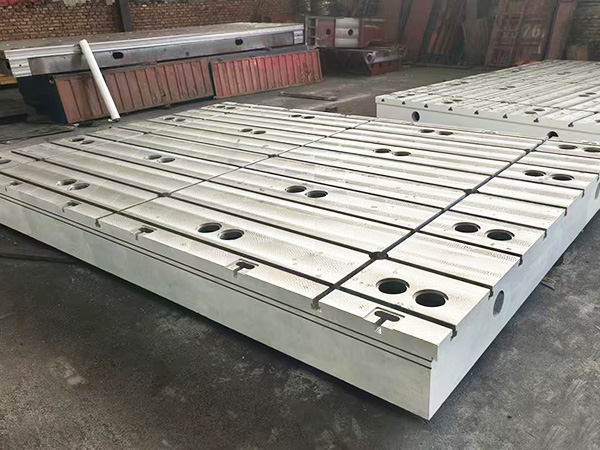
Some applications need slots in two directions, or a mix of T-slots and tapped holes. It is worth deciding this at the design stage, since adding features after the surface has been ground risks disturbing the flatness grades the plate was built to. If the plate will also be used as a measuring datum, keep a clear unsotted border around the working area so a straightedge or gauge has a continuous surface to reference.
Body Structure and Load Capacity
Under the flat top, the casting is rarely solid. Manufacturers use box-type and ribbed constructions, with the box-type structure the most widely used for its strong load-bearing capacity and stable performance. Internal ribs stiffen the plate against bending while keeping weight manageable — important for a large table that must still be moved and leveled during installation.
Load capacity is a function of both structure and support. A plate resting on three or four well-placed supports behaves predictably; one sitting on an uneven floor can twist under its own weight and lose accuracy. For heavy workpieces, ask the supplier to recommend support points and, where needed, supply adjustable leveling feet. Spread a heavy load across the plate rather than concentrating it at one edge.
Sizes and Customization
Standard sizes commonly run from 300×300 mm up to 4000×2000 mm, which covers most bench, floor and assembly-line applications. Within that range, makers can customize T-slot specifications — slot pitch, width, number of slots and orientation — to match a particular fixture or machine. Larger plates are often built in sections and joined, so the interface between sections must be machined to preserve a continuous datum.
When ordering a custom size, provide the footprint available in the shop, the maximum workpiece dimensions and the clamps to be used. Also state whether the plate will be used mainly for measurement or for clamping, because that decides how much flat surface should be left between slots. A short conversation at the drawing stage prevents a plate that technically meets the size but does not fit the workflow.
Setting Up and Fixture Positioning
Installation starts with a level, rigid base. Place the plate on its supports, bring it roughly level, then use a precision level to bring the working surface within the tolerance the grade demands. Recheck after a few days of use, since foundations and supports settle. Once level, the slots make fixture positioning straightforward: slide T-nuts into place, bring the workpiece against locators, and tighten clamps in a balanced sequence so the part is not pulled sideways.
For repeat jobs, mark slot positions or use fixed stops so the next operator can rebuild the same setup quickly. The datum does not change between batches, so inspection results stay comparable. Avoid over-tightening clamps on a slender part; the plate will hold, but the workpiece may deform.
Care, Cleaning and Wear
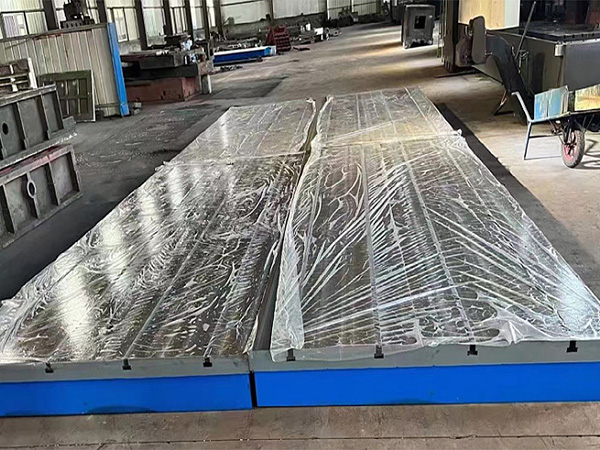
A cast iron surface will rust if left bare in a humid shop, so protect it. After use, wipe away swarf and coolant, apply a light film of suitable oil or rust inhibitor, and cover the plate when it is idle. Do not grind on the working face or use it as a welding table; sparks and scale will damage a surface built to a flatness grade. Lift plates with proper slings and never drag a heavy component across the top.
Over time, the working surface and slot edges do wear. A periodic inspection — a straightedge check for shop use, or a calibrated survey when the plate is used for certification — will show whether the plate still holds its grade. Light re-scraping or re-grinding can restore a worn plate, but it should be done by a shop equipped to re-verify flatness across the whole surface, including around the slot mouths.
Common Mistakes to Avoid
The first mistake is ordering by size alone. Two plates of identical dimensions can behave very differently if one was properly aged and the other was machined soon after casting. The second is ignoring support: even a well-made plate will lose accuracy on a soft or uneven base. The third is treating the slots as an unlimited clamping resource — a clamp that bridges a slot incorrectly puts a side load on the slot edge, which over time rounds the mouth and weakens location.
Finally, do not assume a grade is permanent. A heavy part set down hard can raise a local bump. Build a habit of straightedge checks, and take a damaged plate out of precision service until it has been assessed.
Frequently Asked Questions
What is the difference between a T-slot platform and a plain surface plate? A plain surface plate is a datum only. A T-slot platform adds machined channels that accept bolts and T-nuts, so the same surface can both reference and hold a workpiece.
Which accuracy grade should I choose? Choose by task: 00 for metrology, 1–2 for general inspection and toolroom work, and 3 for heavy assembly and fixture mounting.
Can the T-slot spacing be customized? Yes. Slot pitch, width, number and orientation can be specified to suit existing clamps or a particular fixture, provided the layout is agreed before final machining.
How often should the plate be rechecked? For daily shop use, a quick visual and straightedge check is sensible at regular intervals, with a full calibrated survey at least once a year if the plate is used to verify other tooling.
Will the slots weaken the plate? Not when the slot layout is properly designed. The plate body is cast with ribs or a box structure to carry load, and unsotted margins are left where a continuous datum is needed.
Conclusion
A T-slot cast iron platform is a practical investment because it combines a stable measuring datum with flexible clamping in one tool. The essentials are a sound gray iron casting that has been properly aged, a flatness grade matched to the real job, a slot layout designed around the clamps in use, and a support and care routine that protects the surface. Get those right and the plate will keep setups repeatable and inspection results consistent for years. Botou Mingtu Machinery Equipment Manufacturing Co.,Ltd manufactures T-slot platforms alongside granite surface plates, machine tool castings, welding tables and other cast iron products, and can advise on size, grade and slot configuration for a given application.
References
[1] ISO 8512-1:1990 — Surface plates, Part 1: Cast iron.
[2] GB/T 22095-2008 — Cast iron surface plates.
[3] JB/T 7974-2000 — Cast iron surface plates, technical conditions.
[4] DIN 876-1:1993 — Surface plates made of cast iron.
[5] BS 817:2008 — Surface plates and accessories, specification.
[6] ISO 1101:2017 — Geometrical product specifications (GPS): Geometrical tolerancing, tolerances of form, orientation, location and run-out.
[7] JJG 117-2013 — Verification regulation of surface plates.